Projects & Research
TORQ: Turn Any Car into a Self-Driving Vehicle — 1st Place, NVIDIA Edge AI Track @ TreeHacks
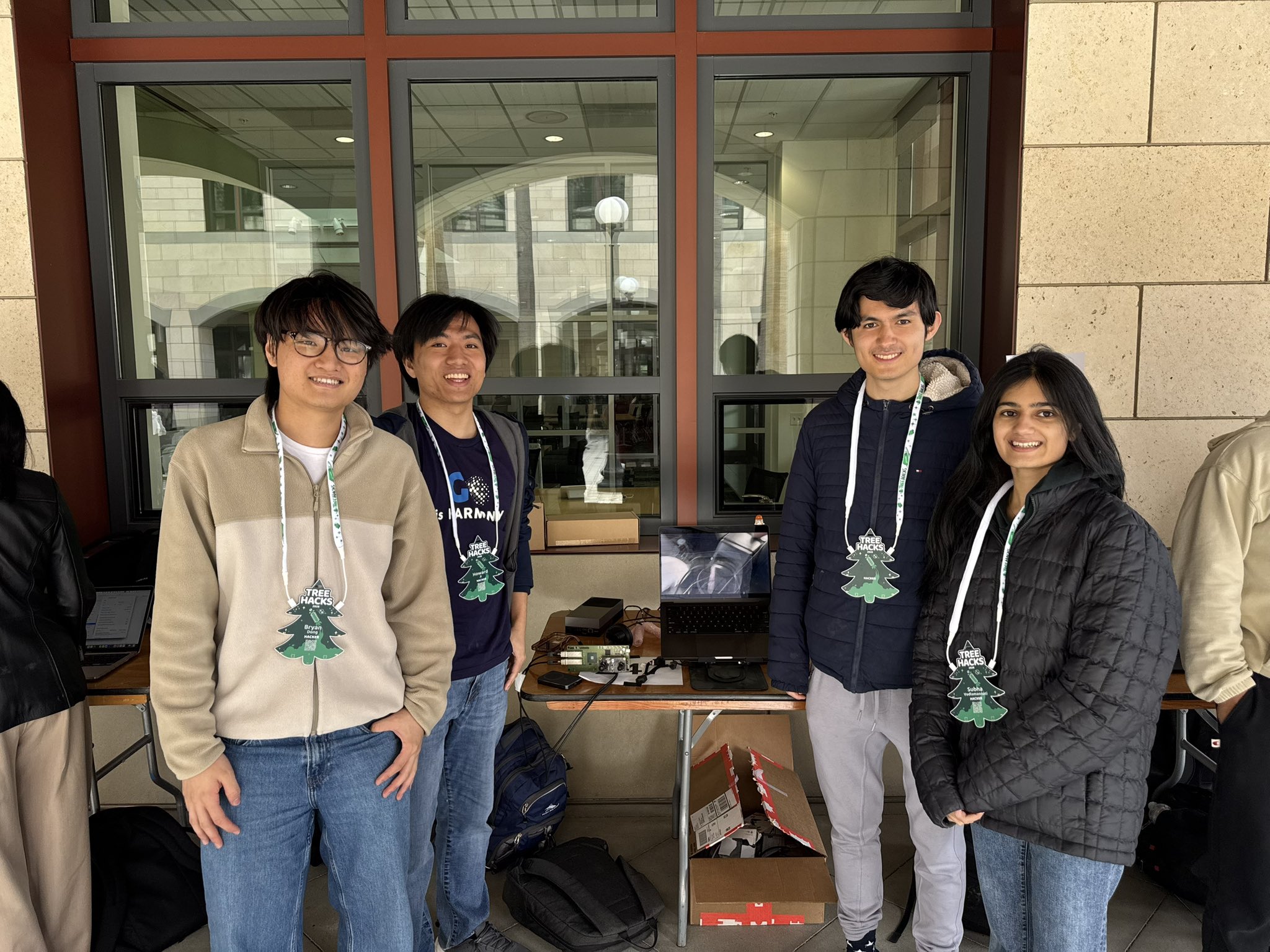
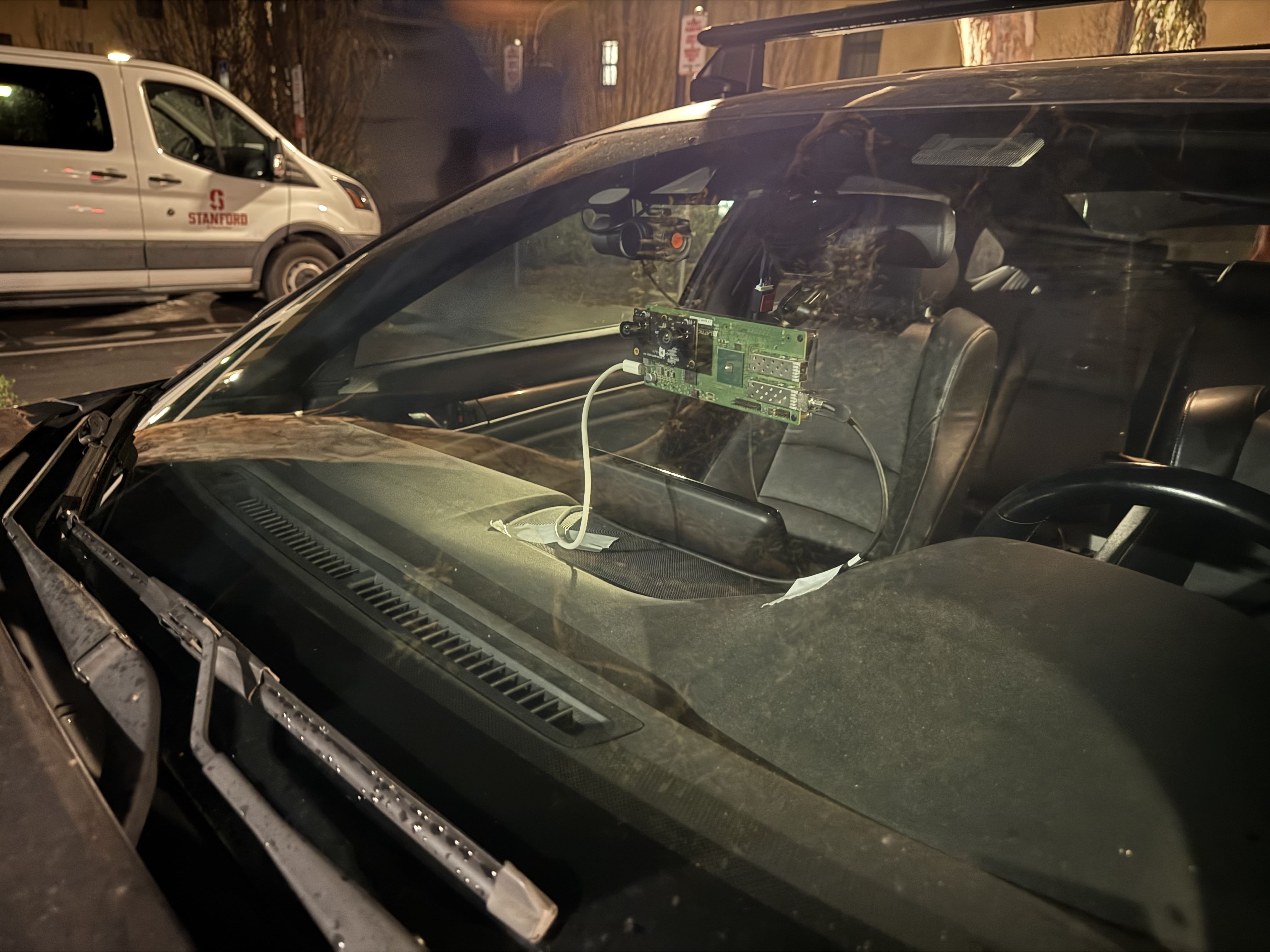
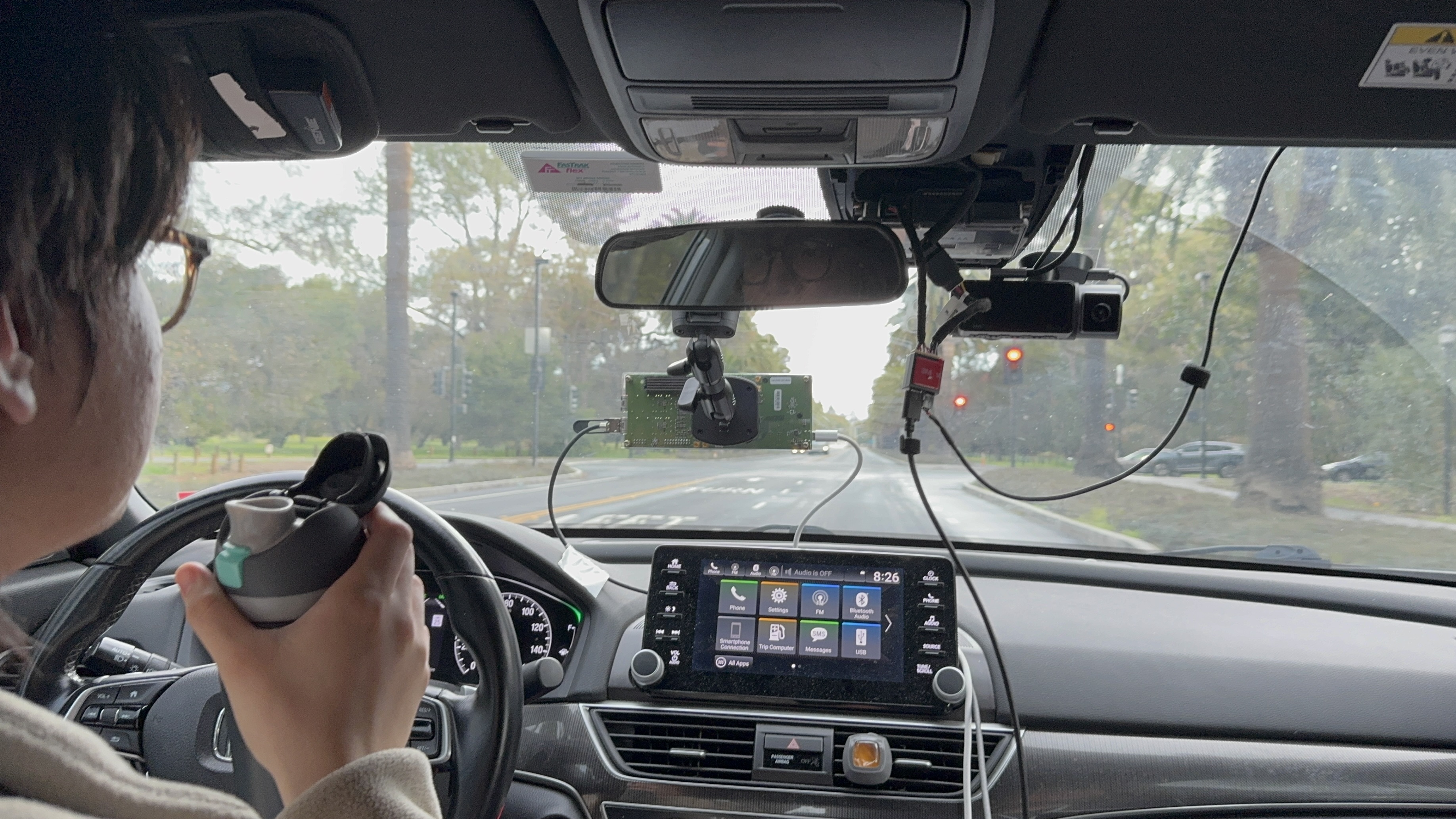
Self-driving shouldn't be limited to new Teslas and Waymos. TORQ retrofits any existing car with autonomous driving capability using commercially available hardware and open-source software. We demonstrated this on a 2018 Honda Accord — using our iOS app, a rider can request a pickup and the car drives itself to them.
The architecture separates driving into two layers: a high-level reasoning layer running NVIDIA's Alpamayo R1 (a 10.5B parameter vision-language-action model) that interprets scenes, plans routes, and explains its decisions in natural language, and a low-level control layer derived from sunnypilot (a fork of comma.ai's openpilot) that handles lane holding and smooth actuation at 100 Hz. Both layers run on an NVIDIA Jetson AGX Thor, with cameras connected through the Holoscan Sensor Bridge routing uncompressed video directly into GPU memory. Physical vehicle control goes through comma.ai's Red Panda CAN bus adapter.
The rider-facing iOS app doubles as a transparency interface — passengers see live reasoning from Alpamayo explaining what the car sees and why it's making each decision, and can converse with the system to ask questions or suggest route changes. All testing was conducted with a safety driver present. Next steps include distilling Alpamayo for real-time on-device inference using Thunder Kittens and TensorRT-Edge-LLM with NVFP4 quantization.
SPRUCE: Multi-resolution Satellite Fusion for Canopy Height Prediction
We designed a multi-resolution fusion CNN that replaces proprietary imagery with open-access Sentinel-1 SAR and Sentinel-2 multispectral data to predict forest canopy height. To process over 7 million samples (3TB+) efficiently, we built a distributed training pipeline using PyTorch DDP across 8 NVIDIA B200 GPUs, implementing mixed precision training and spatial cross-validation to prevent data leakage. The resulting model achieved a Mean Absolute Error of 5.08m, outperforming our single-resolution baseline by 44% and demonstrating a scalable approach to global biomass monitoring.
HILITe: Human-AI Collaborative Framework for Image Transcreation (EMNLP HCI+NLP 2025)
Co-authored an open-source framework that localizes images for cultural relevance by routing requests across 6 specialized diffusion models via a VLM reasoning engine. By integrating human-in-the-loop feedback from translators across seven countries, we built a system that outperforms DALL-E 3, achieving a 25.7% improvement in accuracy over automated baselines. The platform leverages ensemble modeling and reference-based masking to overcome the "cultural bottleneck" in standard AI, providing a scalable solution for authentic, cross-cultural content adaptation.
Optimized B200 Matrix Multiplication
Built a high-performance matrix multiplication kernel for NVIDIA's B200 GPU achieving ~1200 TFLOPs. Implemented persistent kernels with multi-stage pipelining using a circular buffer, leveraging the Tensor Memory Accelerator (TMA) for efficient global-to-shared memory transfers and the new Blackwell TMEM for tensor core accumulation. Used BF16 inputs with FP32 accumulation and optimized synchronization patterns between producer and consumer warps.